
How Customers Decide Whether to Trust
Your Business Online
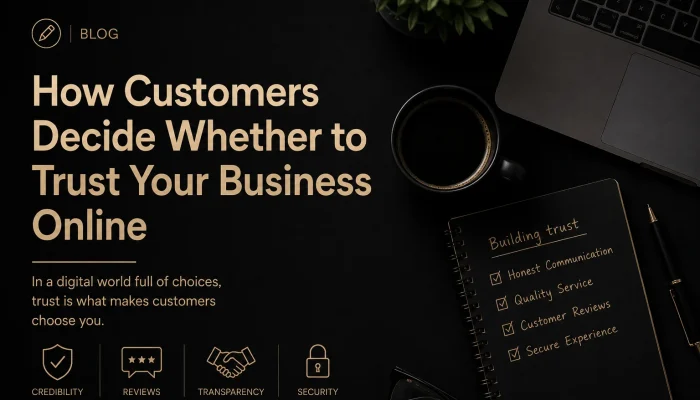
Trust is often the first reason a customer chooses one business over another. Before someone sends a message, makes a phone call, or visits a store, they usually spend a few minutes learning about the business online. During that short time, they decide whether the business looks reliable, professional, and worth contacting.
Many small businesses believe that lower prices or more advertising will automatically bring more customers. While these can help, they do not always solve the real problem. People want to feel confident before they buy. If your website, social media pages, or business information create doubt, many visitors will leave without taking the next step.
Building trust online does not happen overnight. It grows through clear communication, honest information, and a positive experience across every digital platform. A business that consistently provides value earns customer confidence over time.
This guide explains the factors that influence trust and how small businesses can strengthen their online presence to attract more enquiries and long-term customers.
Trust Begins Before a Customer Contacts You
Think about the last time you searched for a product or service online. You probably compared a few businesses before making a decision.
Your customers do the same.
They often check:
- Your website
- Google Business Profile
- Customer reviews
- Social media pages
- Contact information
- Recent updates
They are not only looking at what you sell. They are looking for signs that your business is genuine, active, and dependable.
If they find outdated information, broken pages, or unanswered questions, they may decide to contact another business instead.
Your Website Is Your Digital Welcome
A website should make visitors feel comfortable from the moment they arrive.
The homepage should answer simple questions without making people search for the information.
Visitors should quickly understand:
- What your business offers
- Who your services are for
- Which areas you serve
- How they can contact you
Avoid filling your homepage with technical terms or lengthy introductions. Clear language is easier to understand and helps visitors stay focused.
Every page should have a purpose. If someone lands on a service page from Google, they should immediately find useful information that helps them make a decision.
Professional Design Supports Customer Confidence
A professional website does not need expensive animations or complicated layouts.
Most visitors appreciate websites that are clean, organised, and easy to navigate.
A trustworthy website usually includes:
- Consistent colours and fonts
- Easy-to-read text
- Clear navigation menus
- High-quality images
- Fast loading pages
- Contact details that are easy to find
Simple design often creates a better experience than pages filled with unnecessary effects.
Remember, the goal is to help visitors find answers—not distract them.
Honest Information Creates Stronger Relationships
Some businesses try to impress visitors with exaggerated claims.
Statements such as “best company in the world” or “guaranteed number one service” often sound unrealistic unless they are supported by evidence.
Instead, explain your services honestly.
Tell visitors:
- What you do
- Who you help
- How your process works
- What they can expect
When expectations match the actual service, customers are more likely to leave satisfied and recommend your business to others.
Honesty builds long-term trust, while exaggerated promises can damage your reputation.
Show That Real People Are Behind Your Business
Customers feel more comfortable when they know who they are dealing with.
Adding an “About” page is one of the simplest ways to make your business feel more personal.
Share information such as:
- Your background
- Your experience
- Why you started your business
- The values that guide your work
- How you help your customers
You do not need to write a long story. A genuine introduction written in simple language is often enough to help visitors feel connected to your business.
For example, if you are a freelance digital marketer in Calicut, explain your approach to helping local businesses improve their online visibility rather than simply listing your skills.
Helpful Content Builds Authority
Customers appreciate businesses that share useful information before asking for a sale.
Publishing helpful content shows that you understand your industry and care about solving customer problems.
Useful topics include:
- Answers to common questions
- Step-by-step guides
- Practical tips
- Case studies
- Industry updates
- Frequently asked questions
Each article should focus on helping readers make informed decisions rather than promoting your services in every paragraph.
When people consistently find useful information on your website, they begin to view your business as a reliable source of knowledge.
Customer Reviews Speak Before You Do
Every business says it offers good service. Customers, however, often believe the experiences of other people before they believe a business itself.
When someone finds your website, they may also look for reviews on Google or social media. Positive reviews help reduce uncertainty. They show that real people have used your service and were satisfied with the results.
You do not need hundreds of reviews to build trust. A small collection of honest, detailed reviews is often more valuable than a large number of short comments.
Instead of asking every customer to leave a review, ask those who genuinely appreciated your work. A simple follow-up message after completing a project can encourage feedback without making customers feel pressured.
Displaying selected testimonials on your website can also help new visitors understand the value you provide.
Consistency Makes Your Business Look Reliable
Customers notice small details.
If your business name is written differently on your website, Facebook page, and Google Business Profile, people may wonder if they are looking at the same business.
The same applies to:
- Phone number
- Email address
- Business hours
- Logo
- Address
Keeping this information consistent across every platform creates a professional image.
Search engines also prefer consistent business information because it helps verify that your business is genuine.
A Fast Website Shows Respect for Visitors
People expect websites to open quickly.
When a page takes too long to load, many visitors leave before reading the content.
Website speed depends on several factors, including:
- Large image files
- Poor hosting
- Too many plugins
- Unused code
- Large videos that load automatically
Improving speed is not only good for visitors. It also supports SEO because search engines consider user experience when ranking websites.
A fast website allows visitors to move between pages smoothly and encourages them to stay longer.
Mobile Experience Is More Important Than Ever
Many people now search for businesses using their mobile phones.
If your website works well on a computer but becomes difficult to use on a phone, you may lose potential customers.
Check your website regularly on different screen sizes.
Ask yourself:
- Is every page easy to read?
- Are the buttons large enough to tap?
- Does the contact form work correctly?
- Do images fit properly on the screen?
- Is the menu easy to use?
A mobile-friendly website creates a better experience for everyone, regardless of the device they use.
Clear Content Helps Customers Make Decisions
People visit your website because they need information.
If they cannot find answers quickly, they may leave without contacting you.
Each page should answer questions naturally.
For example, a service page can explain:
- What the service includes
- Who can benefit from it
- How the process works
- Expected time frame
- Ways to get started
Avoid writing only for search engines.
Write for people first. Search engines are becoming better at recognising content that genuinely helps users.
Local SEO Helps Nearby Customers Find You
Most small businesses serve customers within a specific location.
When someone searches for a service in their area, search engines try to show businesses that are relevant to that location.
This is why local SEO is important.
Simple ways to improve local visibility include:
- Creating a complete Google Business Profile
- Using location-specific keywords naturally
- Adding your business address where appropriate
- Encouraging customer reviews
- Keeping business information updated
For example, if you work as a freelance digital marketer in Calicut, your website should naturally mention the services you provide in Calicut instead of repeating the keyword unnecessarily.
Natural writing improves readability and creates a better experience for visitors.
Trust Grows Through Useful Content
Publishing helpful content regularly shows that your business is active.
It also gives visitors more opportunities to understand your expertise.
Useful content ideas include:
- Answers to customer questions
- Practical business tips
- Industry updates
- Step-by-step guides
- Success stories
- Case studies based on real projects
The goal is not to publish as much content as possible.
The goal is to publish content that solves problems.
When visitors consistently find useful information on your website, they are more likely to remember your business when they need your services.
Strong Service Pages Help Customers Feel Confident
Many businesses create service pages that only list what they offer. This often leaves visitors with more questions than answers.
A good service page should explain how your service can solve a problem.
For example, instead of writing:
“We provide SEO services.”
Explain what SEO means for the customer.
You could write:
“SEO helps your website appear in search results when people are looking for products or services like yours. Better visibility can bring more visitors who are already interested in what your business offers.”
This approach is easier to understand and shows the value of your service.
Every service page should include:
- A simple explanation of the service
- Who the service is suitable for
- Benefits for the customer
- The process you follow
- Frequently asked questions
- A clear contact button
When people understand your service, they feel more comfortable taking the next step.
Real Images Create More Confidence
Pictures help people understand your business.
Whenever possible, use original photos instead of generic stock images.
Examples include:
- Your workspace
- Your completed projects
- Your team
- Behind-the-scenes moments
- Events you attended
If you create websites or provide digital marketing services, show screenshots of your work, campaign reports (without revealing client information), or website designs.
These visuals make your business feel more authentic.
Your Brand Should Stay Consistent
A strong brand is not only about having a logo.
It is about creating a consistent experience wherever customers find your business.
Use the same:
- Logo
- Colours
- Writing style
- Contact details
- Business name
Consistency makes your business easier to recognise and remember.
Over time, people begin to associate these visual elements with your business.
Answer Questions Before Customers Ask
Think about the questions you receive most often.
Instead of answering them repeatedly through messages or phone calls, add the answers to your website.
For example:
- How much does the service cost?
- How long does a project take?
- Do you work with small businesses?
- How do I get started?
- What information do you need before beginning?
A well-written FAQ page saves time for both you and your customers.
It also helps visitors feel informed before contacting you.
Fresh Content Shows That Your Business Is Active
An outdated website can create uncertainty.
If visitors see old announcements, expired offers, or a blog that has not been updated for years, they may wonder whether the business is still active.
You do not need to publish content every week.
A realistic schedule is often more effective.
For example:
- One helpful blog article each month
- Updated service pages when needed
- New project examples
- Recent customer testimonials
Small updates help your website stay relevant and useful.
Helpful Content Is Better Than More Content
Some websites publish large numbers of articles without considering quality.
Publishing frequently is not enough.
Each article should answer a real question or solve a real problem.
Before writing, ask yourself:
- Will this help my audience?
- Is the information accurate?
- Is it easy to understand?
- Does it provide practical advice?
If the answer is yes, the content is likely to provide value.
Search engines increasingly reward content that satisfies readers instead of simply targeting keywords.
Build Trust Through Transparency
People appreciate businesses that communicate honestly.
If you have clear pricing, explain it.
If every project is different, explain why prices vary.
If you need time to complete a service, give a realistic estimate.
Clear communication reduces misunderstandings and helps customers make informed decisions.
Trust grows when expectations match the final experience.
A Simple User Experience Encourages More Enquiries
Visitors should never struggle to contact your business.
Include contact options that are easy to find.
Examples include:
- Contact form
- Email address
- Phone number
- WhatsApp button
- Google Maps location
Avoid making visitors search through multiple pages just to find your contact details.
The easier it is to contact you, the more likely people are to reach out.
Frequently Asked Questions
Trust helps people feel comfortable choosing your business. When visitors believe your business is reliable, they are more likely to contact you, buy your products, or recommend your services to others.
Start with the basics. Keep your website updated, provide accurate business information, respond to customer enquiries, publish helpful content, and encourage genuine customer reviews. These simple actions create a positive experience for both visitors and search engines.
Yes. A well-organised website helps visitors understand your business quickly. It also makes it easier for customers to learn about your services, contact you, and decide whether your business is the right choice for their needs.
Review your website every month. Update your services when they change, publish useful blog articles regularly, check for broken links, and replace outdated information. Small updates help keep your website relevant and trustworthy.
Yes. Helpful articles, guides, and answers to common questions show that you understand your industry and want to help your audience. Over time, this strengthens your reputation and encourages visitors to return to your website.